Easy Battery Fix Reviews: Important Facts to Know
Easy Battery Fix™ Reviews
Easy Battery Fix Reviews: Important Facts to Know
Exploring Easy Battery Fix™? Learn about battery performance, common battery problems, repair and replacement options, practical maintenance tips, and the important facts to consider before choosing a battery-related product or service.
Introduction to Easy Battery Fix™
Batteries power many of the devices and systems people rely on every day. When a battery begins losing its charge, performs inconsistently, or fails to supply enough power, it can create inconvenience and unexpected expenses. Understanding the cause of a battery problem is the first step toward deciding what to do next.
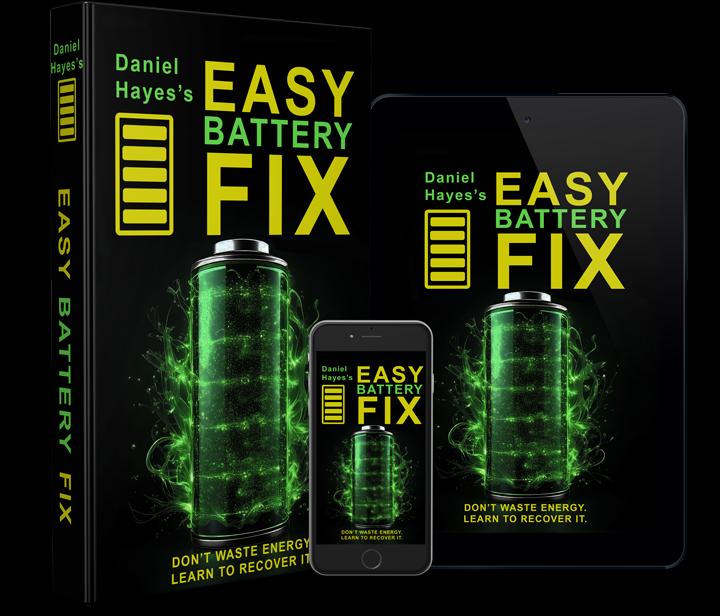
Easy Battery Fix™ is the subject of this informational review. Before purchasing any battery-related product, it is worth understanding what it claims to offer, how battery performance works, which problems may be repairable, and when replacement is the safer or more economical option. Product descriptions should always be checked against the manufacturer's current instructions and independently verifiable information.
A battery that appears weak does not always have the same underlying problem as another weak battery. Age, temperature, charging habits, electrical faults, corrosion, and normal chemical wear can all affect performance. Consequently, no single method should be assumed to restore every battery.
Important: This page provides general educational
information. It does not establish that Easy Battery Fix™ can restore
a particular battery, and it does not independently verify product
performance, laboratory testing, customer reviews, pricing, or
guarantees. Check the official product information before making
a purchase.
What Should You Know Before Trying a Battery Fix?
The phrase "battery fix" can describe several different approaches, including troubleshooting, charging, cleaning external connections, replacing a faulty component, or using a manufacturer-approved maintenance process. These approaches are not interchangeable. Understanding the exact product or service being offered matters more than relying on a general product name.
01. Identify the Battery Type
Check whether the battery is lead-acid, lithium-ion, nickel-metal hydride, or another chemistry. Different types have different charging, maintenance, and safety requirements.
02. Understand the Problem
Low charge, poor connections, a defective charger, and permanent internal degradation can produce similar symptoms. A proper diagnosis helps avoid unnecessary spending.
03. Check Product Instructions
Review the intended use, compatibility, limitations, safety guidance, refund conditions, and any evidence supporting the advertised claims before proceeding.
Can an Old Battery Always Be Restored?
No. Some batteries may regain usable performance after an appropriate recharge or correction of an external problem. Other batteries lose capacity because of irreversible chemical changes, damaged cells, excessive wear, or physical deterioration. A maintenance procedure cannot be assumed to reverse every form of aging.
For example, a rechargeable battery that has been left unused may simply need the correct charging procedure. A battery with a damaged internal cell, however, may remain unreliable even after charging. These cases require different responses, and a professional assessment may be necessary when the cause is unclear.
How Batteries Work and Why Performance Declines
A battery stores energy in chemical form and converts it into electrical energy when connected to a suitable circuit. Rechargeable batteries are designed to reverse much of this chemical process during charging. Over time, however, repeated charge and discharge cycles can reduce the amount of energy a battery stores.
1. Natural Aging and Capacity Loss
Battery capacity generally decreases with age and use. A battery may still operate a device but provide less runtime than it did when new. This gradual decline is common and does not necessarily mean the battery can be returned to its original condition.
2. Incorrect Charging Practices
Using an incompatible charger, charging outside the manufacturer's recommended temperature range, or repeatedly leaving a battery in unsuitable conditions may affect its service life. Follow the instructions supplied for the specific battery and device rather than applying a universal charging method.
3. Temperature and Storage
Very high or low temperatures can affect battery performance. Long periods of storage in unsuitable conditions may also contribute to deterioration. Whenever possible, store batteries according to the manufacturer's recommendations and keep them away from excessive heat, moisture, and direct sunlight.
4. Corroded or Loose Connections
A device may behave as though its battery is failing when the actual problem is a loose terminal, damaged cable, dirty contact, or faulty charging port. External electrical faults should be investigated safely before concluding that the battery itself needs repair. Never touch exposed conductors or attempt work on energized equipment.
5. Internal Damage or Cell Failure
Batteries can develop internal faults that are not visible from the outside. Swelling, leakage, unusual heat, physical deformation, or a strong chemical odor can indicate a dangerous condition. Do not attempt to revive, charge, puncture, or open a damaged battery. Stop using it and seek appropriate professional guidance.
What Does This Mean for Easy Battery Fix™?
The suitability of any battery-related solution depends on its documented purpose and the condition of the battery. Before assuming that Easy Battery Fix™ can revive an old battery, determine whether the product is intended for your particular battery type and whether its claims are supported by credible evidence.
Be cautious of absolute statements promising that every battery can be restored in minutes or that replacement will never be necessary. Battery chemistry, condition, age, and design all affect the possible outcome. A responsible purchasing decision should take these limitations into account.
Potential Benefits and Important Considerations
When evaluating a battery maintenance product or repair service, focus on practical outcomes rather than promotional language. The benefits below describe what consumers may look for in a battery-related solution; they are not verified performance claims about Easy Battery Fix™.
Convenience and Time Savings
Troubleshooting guidance can help users understand basic battery issues without immediately purchasing replacement equipment. However, the time needed for diagnosis, charging, testing, or repair varies. Do not assume that a particular procedure will deliver immediate results.
Potential Cost Awareness
Diagnosing a problem before replacing a battery may help avoid unnecessary expenses. If the issue is actually a defective charger or poor connection, correcting that problem may be more appropriate than buying another battery. Any potential savings depend on the diagnosis and the actual cost of the available options.
Better Battery Maintenance Habits
Learning how to charge, store, and inspect batteries correctly can help users make informed decisions. Good maintenance may reduce avoidable problems, although it cannot eliminate normal battery aging or guarantee a particular lifespan.
Questions to Ask Before Buying
- What exact battery types and models are supported?
- Is the product a physical device, a service, or informational material?
- What equipment or additional supplies are required?
- Are the advertised results supported by independent testing?
- Are instructions, limitations, and safety warnings clearly provided?
- What is the total price, including delivery or additional charges?
- Are refund terms and customer support details clearly available?
Buying tip: Verify that the product description,
seller identity, payment process, contact information, and return
policy are clear. Do not rely solely on testimonials or dramatic
before-and-after claims when evaluating a purchase.
Battery Repair vs. Replacement: Which Is Better?
Repair and replacement serve different purposes. Repair may be reasonable when a fault is identifiable, safely repairable, and economical to correct. Replacement may be the better choice when the battery is damaged, has substantially degraded, cannot hold sufficient charge, or presents a safety concern.
When Repair or Troubleshooting May Make Sense
- The problem may be caused by a charger, cable, or external connection.
- The battery manufacturer provides an approved maintenance procedure.
- A qualified technician identifies a repairable fault.
- The repair cost and expected remaining service life make practical sense.
When Replacement May Be the Better Option
- The battery is swollen, leaking, cracked, or unusually hot.
- The battery has a confirmed internal fault that cannot be safely repaired.
- Capacity has deteriorated to the point that normal use is unreliable.
- The manufacturer recommends replacement or the battery has reached its service limit.
- The cost of repair approaches or exceeds the cost of a suitable replacement.
Repair vs. Replacement Comparison Table
| Factor | Repair or Troubleshooting | Replacement |
|---|---|---|
| Best suited for | Diagnosable, safely correctable problems | Damaged, worn-out, or unreliable batteries |
| Initial cost | May be lower, depending on the fault | Requires the purchase of a compatible battery |
| Time required | Depends on diagnosis, charging, and repair | Depends on availability and installation |
| Expected result | Depends on whether the underlying issue is correctable | Provides a new battery, subject to product quality and compatibility |
| Safety | Must follow approved procedures and battery-specific precautions | Requires correct selection, handling, and installation |
| Long-term value | Depends on repair cost and remaining battery life | Depends on price, warranty, quality, and expected service life |
Neither approach is automatically best for every situation. Compare the diagnosis, cost, warranty, expected service life, and safety requirements before deciding. If a battery is physically damaged, do not attempt a revival procedure just to avoid replacement.
Practical Tips for Better Battery Maintenance
Basic maintenance habits can help you monitor battery condition and identify problems early. Always prioritize the instructions supplied by the battery or equipment manufacturer because recommended practices differ by chemistry and application.
-
Identify the battery and its specifications.
Check the model, chemistry, rated voltage, and manufacturer instructions before charging, testing, or servicing it. -
Use compatible charging equipment.
Choose a charger approved for the battery type and follow the specified charging procedure. Avoid improvised charging methods. -
Inspect the exterior without opening the battery.
Look for visible damage, swelling, leakage, damaged cables, or signs of overheating. Do not handle a battery that appears unsafe. -
Pay attention to operating conditions.
Avoid unnecessary exposure to extreme temperatures, moisture, and direct heat. Follow the manufacturer's storage recommendations. -
Monitor changes in performance.
Record unusual drops in runtime, charging interruptions, or repeated low-battery warnings. These observations can help a technician diagnose the issue. -
Replace batteries when required.
If testing confirms that the battery has reached the end of its useful life, choose a compatible replacement and recycle the old battery through an appropriate collection program.
Common Battery Mistakes to Avoid
- Using an incompatible charger because its connector fits.
- Ignoring swelling, leaking, unusual heat, or other warning signs.
- Opening a sealed battery or attempting to replace internal cells without proper qualifications.
- Assuming a low reading always means the battery can be restored.
- Purchasing a product without checking compatibility and return terms.
- Disposing of rechargeable batteries in ordinary household waste where prohibited.
How to Evaluate Easy Battery Fix™ Before Ordering
A careful review should separate the product's advertised claims from facts that can be independently confirmed. The following checklist can help you assess Easy Battery Fix™ or another battery-related offering before spending money.
Step 1: Read the Official Product Description
Start by checking the official website for a detailed explanation of what is being sold. Confirm whether it is a physical product, a repair method, a diagnostic tool, or an informational guide. The exact format determines what you should expect to receive.
Step 2: Confirm Compatibility
Look for a clear list of supported battery types and applications. A solution intended for one battery chemistry may not be suitable for another. If compatibility is unclear, ask the seller for clarification before ordering.
Step 3: Examine the Evidence
Look for independently verifiable tests, transparent methodology, and results that identify the battery type and condition. A single testimonial or demonstration cannot establish that a product works across all battery models or restores original capacity.
Step 4: Review the Purchase Conditions
Verify the final price, payment terms, shipping details, refund eligibility, warranty coverage, and customer support channels. Save a copy of the product description and order confirmation for your records. Never assume that a guarantee exists unless its terms are clearly published.
Step 5: Make a Practical Comparison
Compare the product's total cost with the cost of professional diagnosis or a suitable replacement battery. Consider the possible outcome, time required, safety implications, and remaining useful life of your current battery. A low purchase price alone does not guarantee good value.
To review the seller's current information, visit the website below. Confirm all details directly before making a purchase.
Frequently Asked Questions About Easy Battery Fix™
These answers cover common battery maintenance questions and points to consider when evaluating Easy Battery Fix™. They do not constitute independent verification of the product's performance.
1. What is Easy Battery Fix™?
Easy Battery Fix™ is the product or service discussed in this review. Check its official product description to confirm exactly what it offers, its intended use, supported battery types, and any requirements. Those details should be verified before buying.
2. Can Easy Battery Fix™ revive every old battery?
There is no basis to assume that one solution can restore every old battery. Results depend on the battery chemistry, age, condition, and underlying fault. Some forms of degradation are permanent, and a damaged battery may require safe replacement.
3. Does it really fix a battery in minutes?
Any claim about a specific recovery time should be checked against credible product evidence. Diagnosis, charging, and repair can take different amounts of time. Do not assume that every battery problem can be corrected within minutes.
4. Is Easy Battery Fix™ compatible with all batteries?
Compatibility should not be assumed. Battery chemistries have different electrical characteristics and safety requirements. Consult the official product instructions and confirm that your exact battery type and application are supported.
5. Is repairing a battery better than replacing it?
It depends on the cause of the problem. Troubleshooting may be worthwhile when the fault is correctable and safe to address. Replacement is generally appropriate when a battery is damaged, unsafe, or no longer provides reliable performance.
6. How can I tell whether my battery is failing?
Common signs include reduced runtime, repeated charging interruptions, unexpected shutdowns, and difficulty holding a charge. These symptoms can also arise from other equipment faults. Swelling, leakage, or unusual heat requires immediate caution and professional guidance.
7. Is Easy Battery Fix™ safe to use?
Safety depends on what the product is, how it works, and whether it is appropriate for the battery in question. Review the manufacturer's instructions, warnings, and compatibility information. Never attempt to revive a swollen, leaking, or physically damaged battery.
8. How much does Easy Battery Fix™ cost?
The current price has not been independently confirmed in this review. Check the official website for the latest product price, shipping charges, taxes, optional purchases, and any applicable refund or warranty conditions before completing an order.
9. Where can I check product details and purchase terms?
Visit the Easy Battery Fix website using the link provided on this page. Read the complete product description and check compatibility, seller information, customer support details, payment terms, and return policies before making a decision.
10. What should I do if my battery cannot be restored?
Stop using a battery that is damaged or showing warning signs. For other batteries, consider an appropriate diagnostic test performed according to the manufacturer's instructions. If the battery is worn out or unsafe, arrange a compatible replacement and recycle the old battery responsibly.
Your Easy Battery Fix™ Buying Checklist
Before placing an order, use this checklist to keep your decision practical and informed.
- Identify your battery type, model, and actual problem.
- Read the complete product description and instructions.
- Confirm compatibility with your battery and equipment.
- Check credible evidence for any advertised performance claims.
- Review the total cost and compare repair with replacement.
- Read safety instructions, limitations, warranty, and refund terms.
- Confirm seller details and available customer support.
- Avoid any procedure that involves opening or mishandling a damaged battery.
Taking a few minutes to verify these points can help you avoid unsuitable purchases and choose a solution that fits your actual needs. If the product information does not clearly answer your questions, request clarification before paying.
Want to Learn More About Easy Battery Fix™?
Review the current product details, compatibility information, usage instructions, and purchase conditions before deciding whether Easy Battery Fix™ is suitable for your situation.
Product claims, pricing, availability, and guarantees should be confirmed directly with the seller. This page is informational and does not guarantee battery restoration or endorse unverified claims.